أثر التقنيات والبرامج المحاسبية الرقمية الحديثة على مستقبل مهنة المحاسبة
دراسة ميدانية للتحولات والتحديات المتوقعة
DOI:
https://doi.org/10.71207/ijas.v22i87.5610الكلمات المفتاحية:
البرامج المحاسبية الرقمية، التحول الرقمي، أتمتة العمليات، تكامل البيانات، مستقبل المحاسبة.الملخص
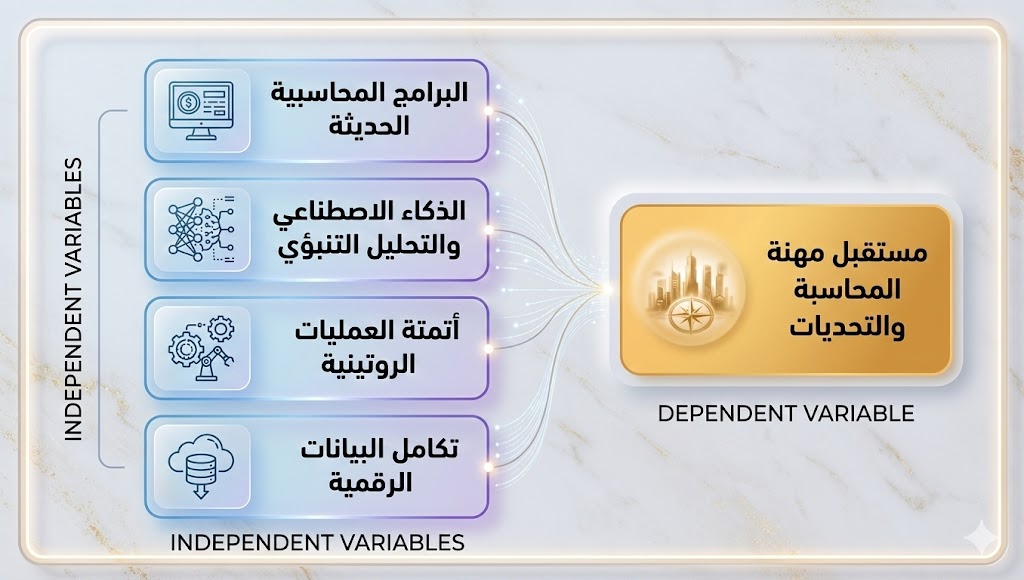
تهدف هذه الدراسة إلى تحليل أثر التقنيات والبرامج المحاسبية الرقمية الحديثة على مستقبل مهنة المحاسبة، وكيف يمكن لهذه الأدوات أن تسهم في مواجهة التحولات والتحديات المهنية. اعتمدت الدراسة على عينة مكوّنة من 133 مشاركًا من المحاسبين والمدققين والتدريسيين، وتم جمع البيانات باستخدام استبيان إلكتروني وتحليلها باستخدام الأساليب الوصفية والانحدار الخطي. أظهرت النتائج أن أتمتة العمليات الروتينية وتكامل البيانات الرقمية مع أنظمة التقارير المالية يمثّلان أهم العوامل المؤثرة في تطوير مستقبل المهنة والارتقاء بجودة الأداء المهني. كما بيّنت النتائج أن استخدام البرامج المحاسبية الحديثة وتقنيات الذكاء الاصطناعي يشكّلان عوامل مساندة تعزز كفاءة التطبيق الرقمي الشامل، وتتجلى فائدتها من خلال تبني منظومة رقمية مترابطة تدعم التحليل المتقدم واتخاذ القرار. وتوصي الدراسة بتطوير التدريب المهني وتحديث المناهج الأكاديمية بما ينسجم مع متطلبات التحول الرقمي.
التنزيلات
المراجع
1. ACCA. (2023). Digital accountancy: Skills for the future. Association of Chartered Certified Accountants.
2. ACCA. (2025). Professional accountants – the future: Drivers of change and future skills. Association of Chartered Certified Accountants.
3. Adoption of digital technologies in the accounting profession: Scholastic analysis of the impact of digital technologies on the accountancy profession in Nigeria. (2023). European Journal of Accounting, Auditing and Finance Research, 11(6).
4. Agha, D. A., Abdulla, A. S., & Nanakali, S. O. O. (2024). The impact of accounting software on accountants’ performance in the furniture companies who are based in Erbil city: A field study. Polytechnic Journal of Humanities and Social Sciences, 5(1).
5. Appelbaum, D., Kogan, A., Vasarhelyi, M. A., & Yan, Z. (2017). Impact of business analytics and enterprise systems on managerial accounting. International Journal of Accounting Information Systems, 25, 29–44.
6. Awang, Y., Nasir, N. E. M., Taib, A., Shuhidan, S. M., & Ifada, L. M. (2024). Digitalization of accounting profession: A decade of bibliometric analysis. Advances in Social Sciences Research Journal, 11(5), 103–120.
7. Barna, L. E., Ionescu, B. Ș., & Gorea, C. C. H. (2024). Professional skills of future accountants working in a digitized environment dominated by ERP systems or artificial intelligence. Proceedings of the International Conference on Business Excellence, 18(1), 1290–1305.
8. Bhimani, A., & Willcocks, L. (2014). Digitisation, “Big Data” and the transformation of accounting information. Accounting and Business Research, 44(4), 469–490.
9. Business-Software.com. (2025). Benchmarking accuracy: Manual vs. automated bookkeeping.
10. Cui, B. (2025). The transformative role of AI in financial reporting: Opportunities, risks, and regulatory implications. Accounting and Finance Research, 14(2).
11. Deloitte. (2024). AI and the future of accounting jobs. ResearchGate.
12. Deloitte. (2024). Generative AI and the future of accounting.
13. Digitalization of accounting profession: An opportunity or a risk for future accountants? (2022). Proceedings of International Academic Symposium of Social Science 2022, 82(1), 93.
14. Elhoushy, M. M., Elhennawy, E. M., & Zaytoun, M. K. (2023). The impact of big data’s characteristics on the management accountant’s role as a business partner – A field evidence from Egyptian environment. Journal of Finance and Accounting, 11(1), 19–27.
15. Gulin, D., Hladika, M., & Valenta, I. (2024). Digitalization and the challenges for the accounting profession. ENTRENOVA – ENTerprise REsearch InNOVAtion Journal.
16. Hasan, A. A. (2025). Implications of digitalization on the accounting profession, auditing practices, and accounting education in Iraq: Challenges and proposed solutions (Master’s thesis). University of Thi-Qar Journal, 20(3), 76–106.
17. ICAEW Insights. (2025, April 14). Accountants embrace AI but need new skills and leadership. Institute of Chartered Accountants in England and Wales.
18. IFAC. (2023). Future-ready accountancy education: Building digital competencies.
19. IJISRT. (2025). Cloud-based accounting systems: Usage and adoption 2025. IJISRT, 10(3), 1–12.
20. IMA (Institute of Management Accountants). (2024). Accounting education in the digital age.
21. Intuit. (2024). Accountant technology survey 2024 report.
22. Jayashree, R., & Jayakani, S. (2025). An empirical analysis of digital transformation in the accounting field and role of accountants: A review of literature. mLAC Journal for Arts, Commerce and Sciences.
23. Kister, A., & Parkitna, A. (2025). Challenges and role of the accountant of the future. Herald of Economics.
24. Kokina, J., & Davenport, T. H. (2017). The emergence of artificial intelligence: How automation is changing auditing and accounting. Journal of Emerging Technologies in Accounting, 14(1), 115–122.
25. Madloul, S. R., & Mohammed, A. M. (2025). The reflection of artificial intelligence technologies on improving the quality of financial reports in commercial banks. Journal of Information Systems Engineering and Management, 10(40s).
26. Menatpour, Z., & Amanollahi, G. F. (2025). The impact of artificial intelligence technology on enhancing the efficiency of auditing processes and increasing financial transparency. Digital Transformation and Administration Innovation.
27. Opudu, D. O., & Tonye, O. (2022). Digitalization and the challenges for accounting profession in an emerging economy. BW Academic Journal, 1(1), 9–21.
28. Papiorek, S., & Hiebl, M. (2024). Future of knowledge intensive work: stakeholder perceptions on technology driven changes in the accounting profession. Review of Managerial Science.
29. Pargmann, J., Riebenbauer, E., Flick-Holtsch, D., & Berding, F. (2023). Digitalisation in accounting: A systematic literature review of activities and implications for competences. Empirical Research in Vocational Education and Training, 15(1), Article 1.
30. PwC. (2024). Cybersecurity risks in financial reporting.
31. QuickBooks Statistics By Market Share, Online and Desktop (2025).
32. Romney, M. B., & Steinbart, P. J. (2020). Accounting information systems (14th ed., pp. 42–55). Pearson.
33. Sage (Ireland). (2024, February 14). 6 time-intensive tasks accountants should automate now.
34. Sarawagi, A., Gupta, A., Singh, M. S., & Bhadouria, S. S. (2024). Analysis of digital accounting applications for SMEs. Asian Journal of Management and Commerce, 5(2), 1–7.
35. Schmitz, J., & Leoni, G. (2019). Accounting and auditing at the time of blockchain technology: A research agenda. Australian Accounting Review, 29(2), 331–342.
36. Sudsomboon, S., Saengkham, P., Peemanee, J., … (2025). Impact of accounting software application skills on operational efficiency: Evidence from private company accountants in Thailand. International Journal of Innovative Research and Scientific Studies, 8(4), 2618–2626.
37. Tazegul, A., & Cimşit, S. G. (2025). Digital transformation in accounting profession; An application in TRA 2 region. International Review of Management and Marketing, 15(4), 67–75.
38. Van der Stede, W. A. (2020). Digital data and management accounting: Why we need to rethink research methods. Journal of Management Control, 31(1), 9–23.
39. Warren, C. S., Reeve, J. M., & Duchac, J. (2019). Financial and managerial accounting (14th ed., pp. 15–25). Cengage.
40. Warren, J., Moffitt, K., & Byrnes, P. (2023). Smart accounting and digital transformation in finance. Journal of Accounting Technology, 15(3), 10–20.
41. Yarmoliuk, O., Abramov, A., Mulyk, T., Smirnova, N., & Ponomarova, N. (2024). Digital technologies in accounting and reporting: Benefits, limitations, and possible risks. Amazonia Investiga, 13, 1–?
التنزيلات
منشور
كيفية الاقتباس
إصدار
القسم
الرخصة
الحقوق الفكرية (c) 2026 Noor Abdulrazaq Hussen

هذا العمل مرخص بموجب Creative Commons Attribution-NonCommercial-NoDerivatives 4.0 International License.
يحتفظ المؤلفون بحقوق الطبع والنشر لأوراقهم دون قيود.